
Views: 94
The Balearic Ports Authority is promoting a new regulation to govern coexistence within the port service area of the Port of Maó. Among the activities it seeks to restrict are swimming in non-marked areas, placing chairs, camping with motorhomes, or eating and drinking inside a vehicle, a practice interpreted by the text as camping. The GOB has submitted a letter requesting a reconsideration of the current zoning.
The limitations proposed by the new regulation would make some sense if the port service area referred only to the most heavily modified parts of the harbour. Indeed, swimming at the Moll de Ponent is not particularly desirable. The problem is that, in administrative terms, the “port service area” is not limited to these spaces.
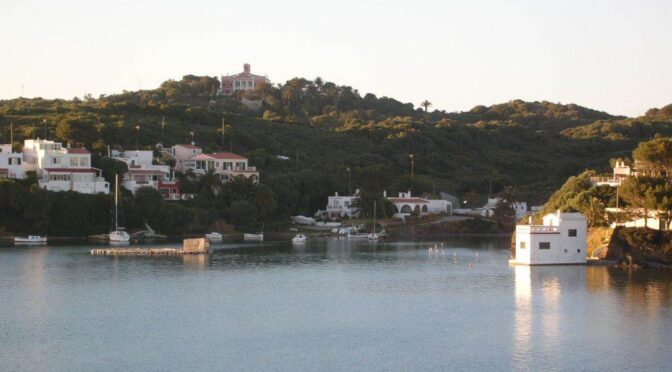
The area classified as intensive port use, designated as Zone 1 in the 2006 Port Space Use Plan, covers the entire Bay of Maó, from the mouth of the harbour to Sa Colàrsega, on both shores. This means that places such as Cala Pedrera, Cala Teulera or La Mola receive the same port classification as Cos Nou or the Maritime Station.
This delimitation fails to consider that Maó is a natural bay of high environmental and cultural value that has been assimilated as a port area. The so-called “service area” includes zones that have no port character and constitute natural spaces of high value or public-use areas for the population.
Some of the activities the regulation seeks to restrict are part of social and cultural uses that are widely consolidated in the municipality. Their prohibition represents a restriction of the right to common use of the public maritime-terrestrial domain without clear justification.
The Port of Maó hosts a great diversity of species, several of them protected. There are seagrasses such as Posidonia oceanica and Cymodocea nodosa, which improve water quality, capture carbon and create refuge for numerous fish species. The bay is also the area in Menorca with the highest density of Cladocora caespitosa, the only reef-building coral in the Mediterranean. All these species generate habitats on the island’s seabed.
In addition, the port is a breeding, nursery and feeding area for fish of fishing interest, and La Mola is an area with a high density of seabird breeding colonies. It is therefore key to the development of various species and the ecosystems to which they belong. The designation of the entire bay as a port service area puts these natural values at risk, as protective safeguards are not administratively incorporated, encouraging the replacement of habitats and species with artificial works and infrastructures.
The great diversity of spaces offered by a port almost six kilometres long, together with thousands of years of close coexistence with the populations settled along its shores, has created a long list of popular uses that are now being restricted under threat of sanctions.
The richness of ethnological values along the shoreline and the understandable customs of the nearby population should be taken into account. All this adds value and differentiation, as opposed to the uniformity of turning everything into a marina.
For all these reasons, the GOB has addressed a letter to the Balearic Ports Authority pointing out the need to review the port’s delimitation and adapt it to the ecological and social reality of the bay. It is urgent to act before it becomes an intensive-use port that excludes both traditional social practices and the natural systems that give it value.