Tag Archives: Philosophy

Innovative ants

Views: 6

One hundred thousand years ago, life must have been very different from today. Humans at that time were still a gathering species and moved nomadically across the land.

Without a fixed place to live and without the entertainment we have now, we can assume that our ancestors spent a great deal of time observing nature. They were familiar with the movement of the stars, the signs that marked atmospheric changes, and the annual cycles of life.

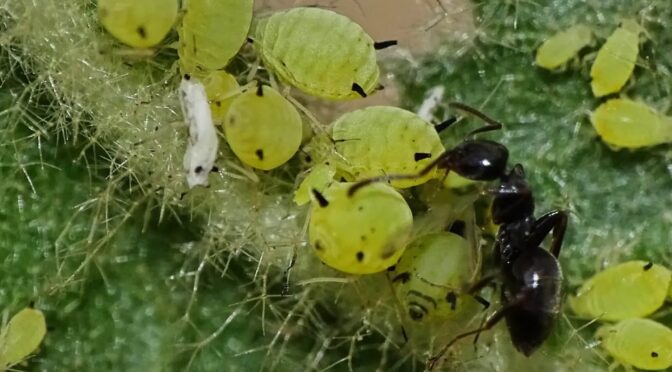
They surely noticed ants, the different tasks they perform and the way they organize colonies of thousands or hundreds of thousands of individuals. Furthermore, they likely discovered that ants cultivate fungi, which they nourish with food.

Continue reading Innovative ants

Symptomatic poppies

Views: 14

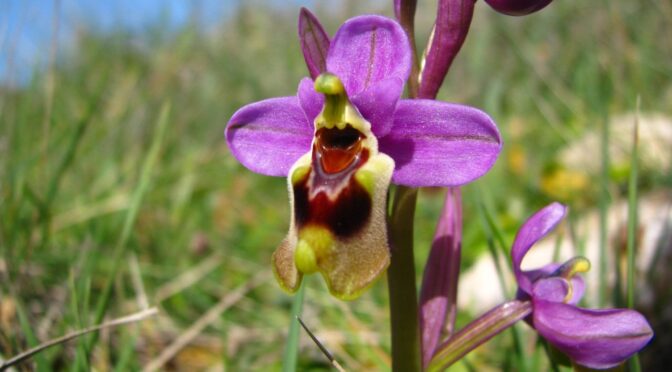
Island botany constantly offers us examples of adaptation and survival capacity. Plants that grow in very poor and shallow soils, in land that is constantly being transformed, as well as in the cracks of buildings and asphalt pavements.

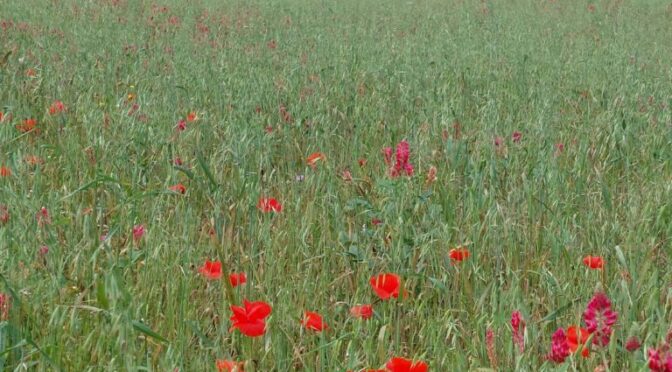
Poppies are one of these examples of resilience. Even if there are only a few, they stand out easily in a cereal field. Being in a clear minority, among thousands of almost identical ears of grain, does not prevent the eye from being drawn to the difference in colour, elegance, attractiveness and composure.

Continue reading Symptomatic poppies

Sustainable distortion

Views: 11

Almost 40 years have passed since the concept of sustainable development was spread worldwide by the United Nations. However, fears about the distortion of the term have gradually come true, and there are still people who equate it with sustained growth.

Ancient philosophers already said that when words lose their meaning, citizens lose their freedom.

Continue reading Sustainable distortion

Profitable devotion

Views: 14

The world is a combination of many viewpoints. Each person focuses on the part that seems most suggestive to them.

Some read the islets surrounding the main island as laboratories of evolution, where the original lizard has taken on its own colours and learned surprising survival strategies, but for others they are potential hunting grounds.

In the past, those who managed to kill one of the last specimens of the monk seal took photographs, proud of an achievement that today we interpret as testimony to the extinction of a spectacular species from our seas.

Cultures and geographies shape the way we see what surrounds us. There was a time when the habit of understanding life as an experience decided by an ethereal and external being began to give way to more empirical interpretations. In the end, it seems that we have chosen to replace the gods of the past with the economic religion.

Continue reading Profitable devotion

The cross-cutting issue

Views: 19

Spring has begun, leaving behind meetings, conferences, studies and debates on important issues in Menorca. Menorca’s winter brings a remarkably active pace of events that encourage reflection and analysis. And in all these initiatives, when one takes a moment to think, a common factor emerges—one that runs through all these issues and fills them with a sense of concern.

We struggle to find solutions for aquifer management, access to housing, waste reduction and recycling, beach overcrowding, and the gradual loss of purchasing power.

Continue reading The cross-cutting issue

Cutting the flower

Views: 55

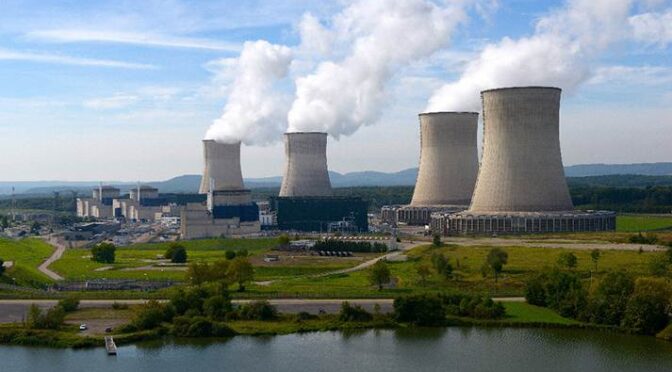
The President of the European Commission says that nuclear energy is strategic for Europe. Next month will mark 40 years since the very serious accident at the (formerly Soviet and now Ukrainian) Chernobyl plant, when a radioactive cloud larger than the entire Iberian Peninsula was released and drifted across the West as far as the United States. The radiation was equivalent to hundreds of bombs like the one in Hiroshima.

Continue reading Cutting the flower

Listening or Hearing

Views: 13

When the flower is full of nectar, the plant emits a specific vibration, inaudible to the human ear but perfectly detectable by certain insects. It is the call for a visit that will nourish the cycle of life. For this to happen, there must be no noise that hides the virtuous frequency that allows communication in nature.

We have long known that there are animals that communicate with sounds too low or too high to be directly noticed by us. The low notes of elephants travel kilometres across the savanna. Sperm whales emit a repeated burst, a kind of crackling sound, with distinct characteristics depending on the area where they usually live, much like our languages.

Continue reading Listening or Hearing

Dangerous land

Views: 52

The theory of no man’s land began as a somewhat rudimentary slogan, but it soon took root because of the usefulness it could offer at particular moments. Circumstances condition many things. When more developed societies carried out the occupation of other territories, it was necessary to dress it up with justification.

The strategy was to argue that no one was using that land. Without ploughing or sowing, it seemed abandoned. It was not difficult to spread the idea of lands that held no interest for those who had arrived previously. A line of reasoning that was very successful, to the misfortune of those who were already living there.

Continue reading Dangerous land

Roofless progress

Views: 48

The Roman Empire had one of its main ports at the mouth of the Tiber River. Intense trade and the movement of people generated an important settlement near the capital. But everything went into decline when rainfall began to bring in large quantities of sediment.

It had always rained. But the enormous deforestation carried out in nearby forests to extract firewood resulted in unprecedented erosion. The port filled with earth and ships could no longer operate. Ignoring limits ended up sinking a prosperous economy.

Continue reading Roofless progress

Moon of hope

Views: 69

They say that the January sky is among the clearest of the year. The moon can also be easily seen during the day. “Blanqueja com s’ametler, com ve que n’està florit, que blanqueja dia i nit, com sa lluna de gener”  [It whitens like the almond tree, as if it were in bloom, whitening day and night, like the January moon] – says the popular rhyme.

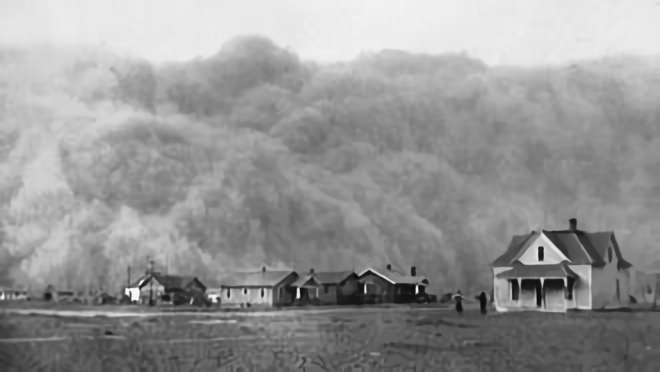
In reality, the moon is always there above us, large enough to reflect the light of the star, but clouds, dust or other elements interfere and make it harder to see once the sun has risen.

Continue reading Moon of hope