
Views: 6
Ozone is a gas that has beneficial effects in the upper layers of the atmosphere, where it filters ultraviolet radiation. However, it becomes harmful when present near the Earth’s surface — in the troposphere.
Tropospheric ozone is a complex pollutant with no single direct human source. Instead, it forms through chemical reactions involving so-called precursor pollutants emitted by transport, thermal power plants, certain industrial activities and intensive livestock farming.
It is produced through the interaction of nitrogen oxides, volatile organic compounds and sunlight. At ground level, ozone is harmful to living beings, primarily affecting the respiratory system, but also contributing to cardiovascular and neurodegenerative problems. It can also interfere with plant photosynthesis and metabolic processes. It is therefore considered a major air pollutant.
According to the report “La contaminación por ozono en España durante 2025” (“Ozone pollution in Spain during 2025”) published by Ecologistas en Acción, certain areas of Menorca are particularly affected by this type of pollution.
Data collected at the Maó monitoring station managed by AEMET recorded 42 days exceeding current legal limits and 84 days exceeding the 2050 targets. If the reference values established by the World Health Organization are applied — as done by the European Environment Agency in its air quality reports — the number of exceedance days would rise to 202.
This represents the second worst result in Spain. For this reason, GOB has written to the Directorate General for Energy of the Balearic Government, the authority responsible for overseeing air quality.
Although tropospheric ozone can originate from pollution generated elsewhere and transported by meteorological conditions, Maó also hosts activities that may contribute to the formation of ozone precursors.
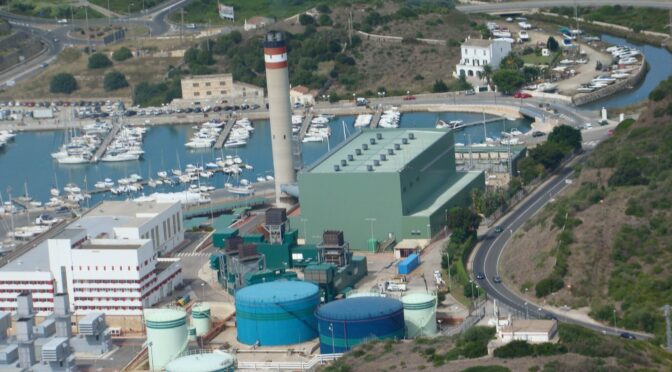
In the Port of Maó, two clearly identified potential sources of nitrogen oxide emissions converge: a power generation facility that burns petroleum-based fuel and the constant presence of large vessels.
The port also hosts boat maintenance services that may use solvents. According to information from the report on volatile organic compounds published by Spain’s Ministry for Ecological Transition, the presence of these gaseous hydrocarbons is strongly influenced by activities involving the use of organic solvents.
In addition, increased solar radiation linked to climate change — which triggers the chemical reactions that form ground-level ozone — is likely to become more frequent.
The recorded levels are serious enough to warrant close attention. The most concerning results were registered at the AEMET station located at La Mola. The port’s other two monitoring stations, situated further inland, are managed by Endesa. GOB has therefore called for the installation of a second AEMET station inside the port area in order to apply consistent methodologies and better assess trends over time.
GOB has also urged the Government to investigate the possible causes of tropospheric ozone pollution in the area and to take the necessary measures to reduce the current health risk to the affected population.