
Views: 36
The Roman Empire had one of its main ports at the mouth of the Tiber River. Intense trade and the movement of people generated an important settlement near the capital. But everything went into decline when rainfall began to bring in large quantities of sediment.
It had always rained. But the enormous deforestation carried out in nearby forests to extract firewood resulted in unprecedented erosion. The port filled with earth and ships could no longer operate. Ignoring limits ended up sinking a prosperous economy.
It is very human to keep pulling the rope until it breaks. Episodes like this have been recorded in various civilizations. One would hope that today this would no longer occur, but there are social and environmental issues that remain outside planning.
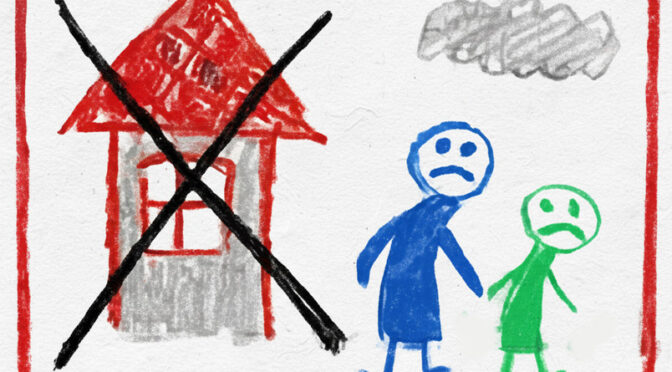
Menorca is beginning to see many cases of people living in dreadful conditions. Basements, caves and vehicles are filling up with people who cannot afford the right to a decent roof. There are also people already sleeping on the street.
On the other hand, aquifers are becoming increasingly depleted. The largest one, Migjorn, has not recovered from the major drop of the last century and for several consecutive years it has been falling again. The northern aquifer, s’Albaida, has been worsening since 2012.
Housing and water problems are intensifying while the economy grows, and we have more knowledge and resources than ever. In other words, people are not losing their homes for lack of economic dynamism. And aquifers are declining when we have sufficiently trained personnel and technological advances that would not have been dreamed of a few decades ago.
These issues should encourage us to stop the inertia we are carrying and analyse what kind of supposed model of progress we are generating, because essential aspects for people’s well-being are not being addressed.
For years, much of the world has suffered from a poor distribution of the wealth that is generated. Anyone who is not a millionaire can confirm this. Housing is not a right but a preferred destination for investment. And in Menorca we have additional characteristics that worsen the situation.
Last year we once again broke the record for the number of tourists (we are now above one million seven hundred thousand). Many stay in houses and flats. Some do so legally, with authorisation. Many others do so illegally (could we then speak of tourist squatting?). Between one thing and another, thousands of dwellings are diverted towards tourist uses.
These days we have been at FITUR. We will allocate more public money than ever to attract people and create more air connections in summer. The Romans damaged their port by not knowing how to set a limit on the logging of trees in the Apennines. The people of Menorca are damaging quality of life by not knowing how to adjust tourist pressure to carrying capacity.
We have a crystal ball to know what future awaits us along this path. It is called Mallorca and Eivissa.
Will the day come when we look at other parameters to assess prosperity? Sensible people who love the island must organise to find effective ways to halt this historic mistake. To redirect unbounded growth that is leaving people without a roof and without water.
(This text is an adaptation of the original article published by Miquel Camps, as coordinator of territorial policy for the GOB, in the Menorca newspaper on 02/02/2026).