
Views: 12
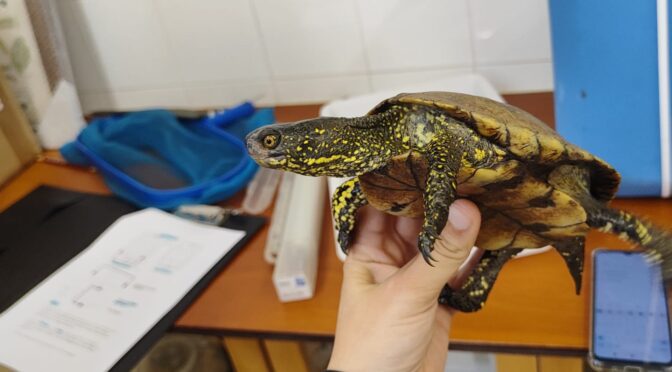
In 2011, during scientific surveys, a male freshwater turtle specimen was captured. In Menorca, these turtles live in streams and large ponds. At that time, it was found in the torrent of sa Boval, where it was released again after being marked, weighing 270 grams.
Last month, 15 years later, the same specimen was collected on the airport road. Therefore, it was located 7.5 kilometres away, in a different hydrographic basin, with the main road in between. It is unknown whether it arrived there by its own means or if it was transported by someone.
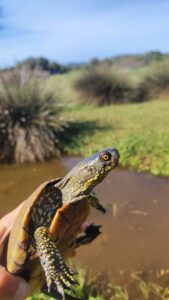 The people who collected it from the road delivered it to the GOB, which made it possible to recover its history and release it again in its original location in sa Boval, now more grown, with a weight of 348 grams.
It seems that this species arrived in Menorca during Roman times or slightly earlier. It is currently a protected species with a relatively stable population, although it suffers from various threats. Its scientific name is Emys urbicularis, and it has a dark colour, with yellow spots or streaks. They usually live around 40 years, although cases of more than 100 years are known.
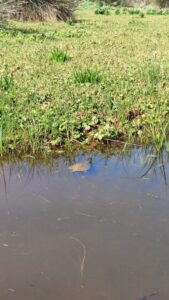 Freshwater turtles have few enemies once they reach adult size, but when they are young they are very vulnerable. They are prey to aquatic birds and other animals. The main negative impacts on this species come from human activity: alteration of their habitats, water pollution, introduction of invasive species, or climate change. The cleaning of streams with heavy machinery, especially during periods when they are buried, is a particular threat in Menorca.
A dangerous competitor is the American-origin freshwater turtle, which often comes from domestic pets that are sometimes released into wetlands. This species grows larger than Emys, is more aggressive, and can also carry diseases.
In cold weather, our freshwater turtles usually hibernate by burying themselves in the mud. In midsummer, another period of inactivity often occurs if the streams or ponds where they live dry up. At that time, they may migrate away in search of other ponds, or bury themselves as in winter.
Our specimen has returned to the original stream at the time when spring courtship begins. We trust that it will be happier there than on the dangerous airport road.
Special thanks to the people who make the effort to help wild fauna that is injured or in danger.