
Views: 9
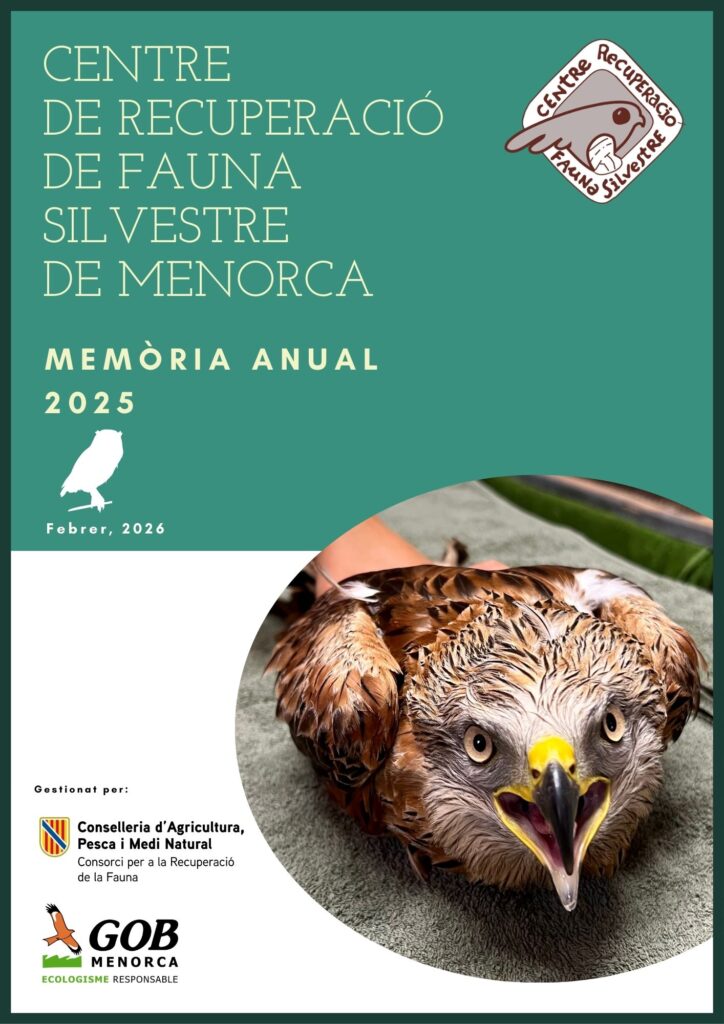
Once again, the Wildlife Recovery Centre of Menorca —operating under an agreement between GOB Menorca and the Consortium for Wildlife Recovery (COFIB), under the supervision of the Department of Agriculture, Fisheries and Natural Environment of the Balearic Government— presents in its 2025 Report the annual summary of the work carried out. A year full of challenges and dedication to the conservation of the island’s native fauna, concluding with 84 species admitted, 70 of which correspond to wild animals.
The total number of admitted animals increases year after year, and 2025 closed with 1,473 admissions, 14.1% more than in 2024. Of these, 1,425 were wild animals, highlighting the important work carried out at the Centre in caring for injured or vulnerable island wildlife. At the same time, educational and awareness-raising efforts have continued to promote appropriate coexistence with our environment, so that wildlife can be enjoyed with respect and care.
 Increase in reptile admissions
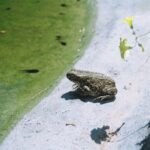
Although birds continue to account for the highest number of admissions and the greatest variety of species (48% of admissions, with 58 different species), this year they decreased by 5% compared to the previous year. Similarly, mammals decreased by 3%, representing 7% of admissions. In contrast, reptiles accounted for 44% of admissions, with a 7% increase compared to 2024.
 An intense summer season
As usual, spring and summer see the highest number of reports and admissions, coinciding with both the breeding season of most animal species and the peak influx of people across the island. Between 15 April and 15 September, nearly 62% of the year’s admissions took place. The most intense months were May, June and July, with 200, 241 and 192 admissions respectively. It is important to highlight that during these months not only does the number of animals increase, but also the time dedicated to their care, as most are young animals that must be fed constantly and with great care.
 Main causes of admission
As in previous years, the main causes of admission are the captivity of Mediterranean tortoises (310), chicks and young animals (228), and trauma such as fractures, dislocations or deep wounds of unknown origin (123). The latter mainly affects birds of small, medium and large size.
 Continued educational work
Once again, the Centre’s staff have continued educating children and adults in the conservation of the island’s biodiversity. This has been carried out digitally through informative posts and appearances on radio and television, as well as in person by participating in excursions and collective releases, opening the doors to hundreds of visitors during the summer and hosting 18 school groups during the academic year.
Success in the recovery of native fauna
The positive outcome of this year of effort and firm commitment is that 909 wild animals were returned to their natural environment, highlighting the importance of the work carried out.
 The importance of collaboration and institutional support
The work carried out at the Centre is possible thanks to a whole support network, beginning with more than 40 volunteers who assist both in maintaining the facilities and in the collection and transport of injured wildlife. It is also important to highlight the role of police officers in managing collections and the establishments that collaborate by providing food.
The Wildlife Recovery Centre of Menorca continues its work thanks to the collaboration of the Island Council and the Town Councils of Ciutadella, Ferreries, Es Mercadal, Es Castell and Maó, as well as the space provided by Lithica.