Views: 28
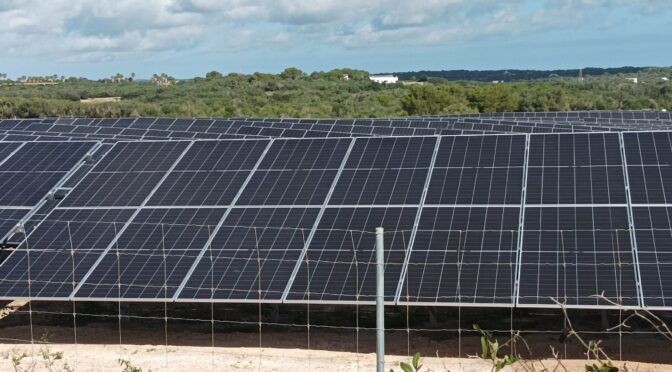
The development of solar parks near Sant Climent and Es Mercadal has once again reopened the debate between renewable energy and land use. This is an issue that is never easy to resolve wherever it arises, but it must be addressed calmly if a responsible approach is to be taken. Menorca has already experienced similar episodes in the past.
The occupation of rural land for energy production inevitably generates controversy, especially in a territory where this issue is particularly sensitive, as has repeatedly been shown on the island. However, what is happening in Menorca should not be confused with the clear environmental damage seen in some areas of mainland Spain, nor should it be assumed that rooftop solar alone can deliver the energy transition. The reality is more complex.
This note, together with a following one, presents the position and arguments of the environmental organisation GOB.
The Sant Climent and Es Mercadal solar parks
Both projects have been in planning for several years and had gone almost unnoticed by most people until construction began. They involve two large-scale interventions:
- Near Maó: three separate areas (Binifaell, Son Orfila and Dragonera), totalling around 90 hectares
- Es Mercadal: two areas (Llinàritx and Biniseguí), totalling 24 hectares
Together, these installations could generate around 24% of Menorca’s electricity demand. In 2025, renewables already accounted for 17% of the island’s electricity consumption, thanks to the commissioning of the Son Salomó plant. With these new projects, Menorca could reach around 41% renewable electricity generation.
We are therefore facing a territorial conflict linked to infrastructure that could represent a significant environmental step forward. While some stakeholders may find their position straightforward, it is more complex for organisations such as GOB, which work directly on environmental issues.
The need to increase renewable energy significantly is unquestionable. The impact of fossil fuels on climate change is widely accepted in the scientific community, and its consequences include faster-than-expected global warming, which will seriously affect the economy, agriculture, water resources and tourism. Menorca cannot remain detached from this challenge.
Objective: reducing fossil fuel use in Maó
The power plant in Maó is identified as the main source of air pollution on the island, responsible for around half of annual emissions. It emits CO₂, nitrogen and sulphur oxides, and fine particulate matter, and it can also contribute to the formation of ground-level ozone.
To move away from fossil fuel combustion and towards significant renewable energy production, interventions in rural land will necessarily be required, using currently mature technologies.
Rooftop solar, while still important and worth promoting, cannot be considered a sufficient alternative on its own. Many roofs are not south-facing, many lack structural capacity for solar installations, and many property owners are reluctant to accept long-term constraints. In addition, the scale of the energy transition requires a very large number of panels.
Even under optimistic assumptions—100 large buildings with suitable roofs—the resulting production would still represent less than 1% of the island’s electricity consumption. Therefore, while rooftop solar should continue (and has already been promoted by GOB), it cannot deliver the energy transition alone.
Wind energy, although not ruled out, is much more controversial due to its high visual impact on a small island landscape. Solar thermal for electricity generation is even more problematic due to the large land areas and high visual footprint required.
 Zoning and construction criteria
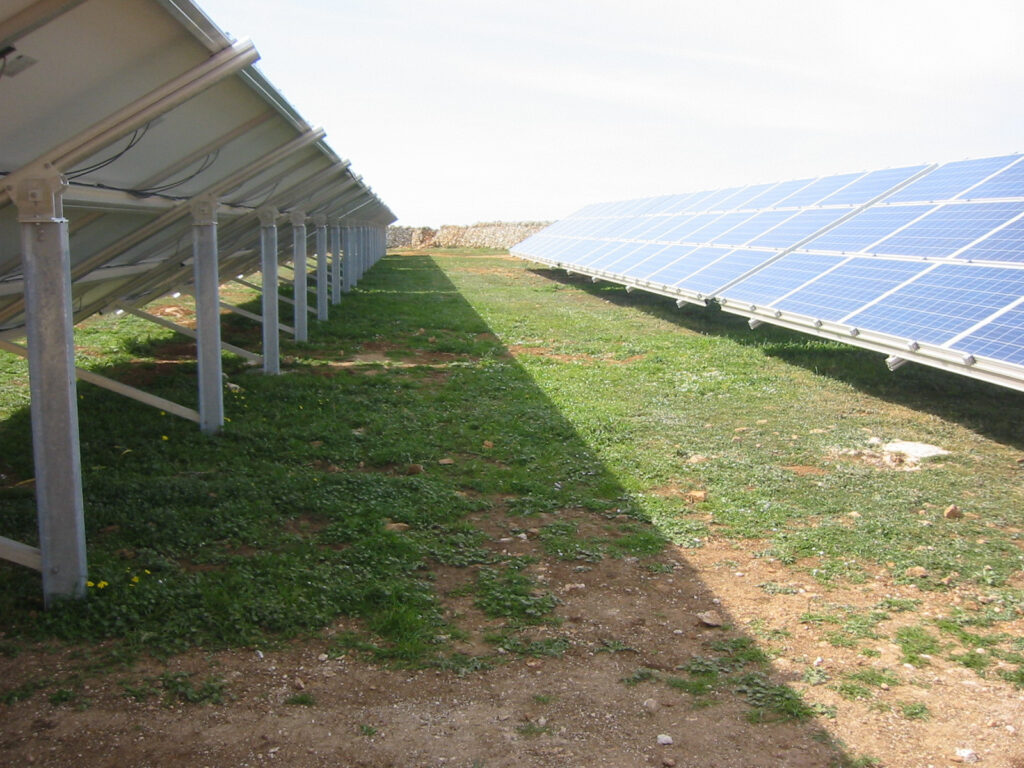
Based on these premises, GOB has worked for many years to establish zoning rules and construction criteria for photovoltaic parks in rural areas, aiming to ensure they are as reversible as possible while minimising impacts and maintaining energy contribution.
The goal is to avoid transforming the landscape into an industrial space:
- Soil structure must not be significantly altered
- Dry-stone walls must be respected
- Ethnological and heritage elements must be restored by developers
In this way, land is used for renewable energy production, but not consumed as it would be in urbanisation processes.
The challenge is to “borrow” land for energy production, not permanently sacrifice it. Ideally, in the future—when consumption is reduced or cleaner technologies exist—these areas could be restored to their original or improved condition. The aim is to oppose more oil and gas, while carefully regulating renewables.
After years of work, these zoning and construction criteria are now included in Menorca’s territorial planning regulations and are mandatory for renewable energy developers.
Grid connection and key issues
As renewable energy expands in Menorca, it is also essential to improve grid connection systems and, above all, reduce reliance on the Maó power plant. Otherwise, renewable energy could end up supplying external demand without significantly reducing local pollution. This concern is behind the objections submitted by GOB regarding the proposed second submarine cable between Mallorca and Menorca.
If this debate is properly understood, it can help establish better criteria for the future. The next note will explore previous experiences, energy connections, landscape impacts and other key elements of the discussion.