
Views: 17
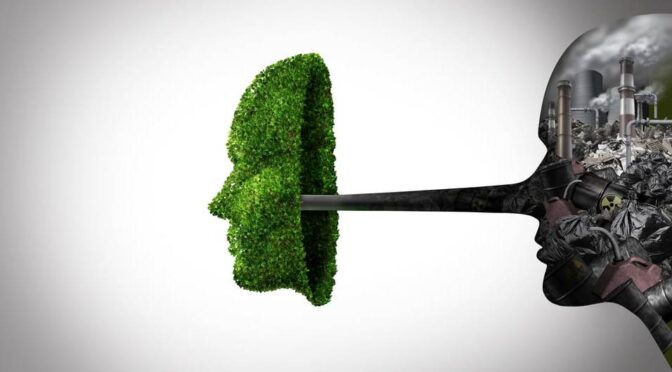
Almost 40 years have passed since the concept of sustainable development was spread worldwide by the United Nations. However, fears about the distortion of the term have gradually come true, and there are still people who equate it with sustained growth.
Ancient philosophers already said that when words lose their meaning, citizens lose their freedom.
Growth means building more houses. Development means that houses are affordable for the resident population.
Growth means increasing the number of tourists. Development means enabling tools so that tourism does not become overcrowded.
Growth means increasing Gross Domestic Product figures. Development means that people can make it to the end of the month with dignity.
The 1980s generated much debate in environmental terms. They were times of acid rain, the hole in the Antarctic ozone layer, nuclear waste (which is still there), the Cold War and oil crises. The limits to growth on a finite planet were being addressed. That is why the focus shifted to development.
At that time, Menorca was constantly fighting to save various natural areas from urban development predation. The idea of distinguishing quality of life from growth was already embedded in many of the people who were mobilising back then.
Places with almost no economy need to grow, just as children do. But once appropriate thresholds have been reached, continuing to grow only generates additional problems (externalities, as they are called). Like a 30-year-old person who intends to keep growing taller.
In response to this idea, development emerges as a qualitative concept. An adult can grow beyond the physical aspect by incorporating knowledge, social skills and holistic understanding. By ensuring a healthy diet, taking part in cultural initiatives, joining associations to gain civic strength…
When all this is done without mortgaging the resources of future generations, it is referred to as development that can be sustained over time. Some linguists, foreseeing interested misunderstandings, advised using the term sustainability directly.
Growth means installing irrigation systems with chemical fertilisers and pesticides. Sustainability means that there is water in the aquifers and that it is drinkable.
Growth means intending to burn waste or send it to Mallorca. Sustainability means reducing waste and recycling intelligently.
Growth means having to restart the old engines of the power plant in summer. Sustainability means modulating the arrival of people to reduce atmospheric emissions.
“That’s enough. We have the right to a dignified Menorca” was one of the slogans heard on the streets of Menorca in those days. We have managed to preserve the most important natural areas. But we have a problem with the metabolism of our society.
In the last 15 years, the number of tourists has increased by 80%. With tourists also comes a large external workforce. As a result, water runs out, solar panels are not enough, and the landfill fills up at an alarming rate.
It is essential to have clear judgement so as not to be misled by confusing sustainability with growth. Menorca must be measured in terms of broad quality, not only quantity.
(This text is an adaptation of the original article published by Miquel Camps, as coordinator of territorial policy for the GOB, in the Menorca newspaper on 25/05/2026).