
Views: 115
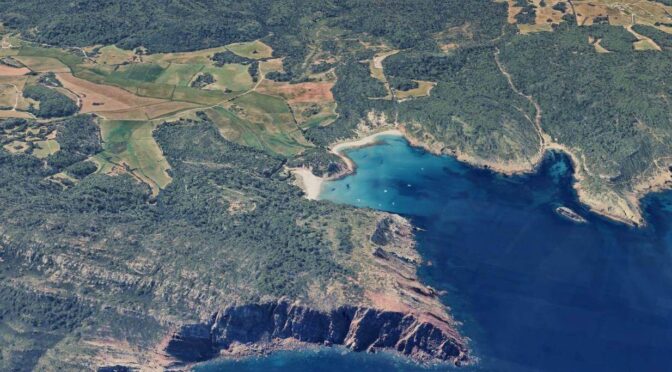
Menorca lies on the 40th parallel of the northern hemisphere, one of the 180 imaginary horizontal lines that humans have drawn across the planet. A design that helps us locate a geographical point and also gives us an idea of climatic conditions. But sometimes science turns theory upside down.
We know that at parallel zero (the equator) it is usually hot, and that at number 90, both north and south, it is very cold. In between, there are progressive gradations.
Similarly, we have tended to think that where it rains more there is more green (Raimon sang about all the shades of green in the Basque Country), and that it is drier where it rains little (the white village of Serrat, where the sky had forgotten how to cry). This is true, but it is an incomplete reading, because it only reads in one direction. We now also know that landscapes generate more or less rain.
It has been proven that functional and mature forests generate atmospheric conditions that encourage rainfall. Likewise, many plants send bacteria, fungal spores and chemical compounds into the air, which end up condensing water and making it rain. As if they were sowing rain. Evolution has these wonders.
When ecosystems are restored, it rains more and better. And if this is combined with regenerative techniques in agriculture, which significantly improve farmers’ economic conditions and turn soils into land with a great capacity for infiltration, miracles occur, such as some springs flowing again.
In the midst of climate change, which is releasing masses of cold air that were previously confined to the Arctic, while we are immersed in a storm of planetary-scale change, there are concrete and successful experiences to correct the course. Feasible actions that make it possible to generate hope again.
Seeing these discoveries, it is inevitable to think that perhaps a good part of today’s social problems, which appear as a permanent threat similar to climate change, could be reoriented if we made a different reading from the standard one.
The world of television, mobile phones and the heralds of ultra-liberal individualism have shaped a society in which many people try to focus only on their own interests. The messages are repetitive. Everything that is public, that is collective, is portrayed as a disaster or a danger.
And so we have a world with a thousand advances, but where wealth is increasingly worse distributed, where biodiversity loss is alarming, where people work but can no longer afford housing. The economy grows at the same time as precariousness. Aquifers are depleted and polluted in areas that are theoretically very wealthy.
Perhaps we need to do as with the weather and start reading social problems in a different way. Perhaps we should not wait for everything to be solved from above, but instead recover collective strength. Associate again to gain capacity. Take back the helm that is now steering us toward a port we do not like.
When citizens organize, governments’ attitudes change. Just as the climate changes when landscapes are restored. And organizing citizens is within reach. Recovering hope and taking action means working for the future instead of giving it up as lost.
(This text is an adaptation of the original article published by Miquel Camps, as coordinator of territorial policy for the GOB, in the Menorca newspaper on 06/07/2026).