
Views: 20
Island botany constantly offers us examples of adaptation and survival capacity. Plants that grow in very poor and shallow soils, in land that is constantly being transformed, as well as in the cracks of buildings and asphalt pavements.
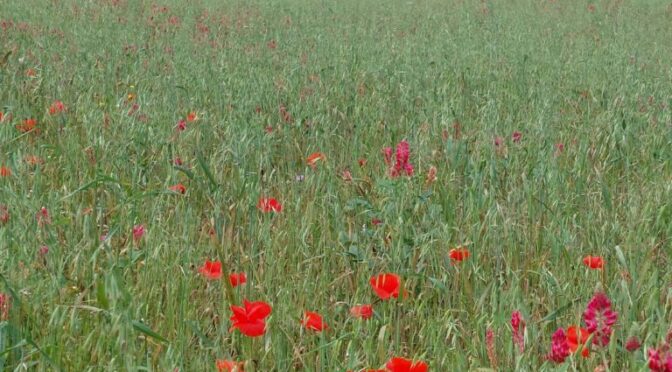
Poppies are one of these examples of resilience. Even if there are only a few, they stand out easily in a cereal field. Being in a clear minority, among thousands of almost identical ears of grain, does not prevent the eye from being drawn to the difference in colour, elegance, attractiveness and composure.
Perhaps because of this ability to flower spectacularly in dryland areas, to shine among large crowds, the Greeks associated this species with introspection, as if attributing to it a cultivated character that allowed the annual wonder of returning to the fields.
Today, poppies are used as bioindicators. Their presence in sown areas is synonymous with the absence of herbicides. As they are easily visible and identifiable, they help to determine whether those fields have truly not been sprayed.
In other cultures, their characteristic red petals symbolize remembrance of those who are no longer with us, as well as the hope of overcoming cycles once again. In other words, they are a mixture of identity and optimism, two ingredients that are especially necessary in the times we are living in.
In Anglo-Saxon countries there is talk of the tall poppy syndrome, referring to cases in which people who envy the position of recognition achieved by certain individuals (natural or legal persons) end up denying it and inventing narratives to build criticism that conceals the true feeling of guilt for their own lack of courage.
Thus, on occasions, the diatribe does not stem from a deep and genuine disagreement, but from the intimate comparison made by the person who is expressing an opinion, which concludes in contempt for themselves, given the great distance separating them from the values they demand of the subject being criticised.
It is said that this syndrome is easier to detect when the author of the slander engages in self-praise and attributes to themselves what they claim to miss in the other party. Clearly, nowadays there are quite a few exponents affected by conditions such as the one described.
Nevertheless, in Menorca, the application of agricultural practices aimed at naturally restoring soil fertility, improving water infiltration capacity and enhancing landscapes is increasing, while economic results are also improving. Places where flowers and biodiversity feel at ease.
We have just celebrated World Environment Day, which on the island took the form of recognition of environmental volunteering. A considerable group of people who constantly devote hours of their free time to steering the planet’s ship towards better ports.
People like poppies, who are beacons, examples of personal integrity, who follow the lead of those who started the journey and who generate enthusiasm to continue along the path towards a better scenario.
Also this Saturday, the 13th, there will be a gathering to call for more sustainable management of the island, one that does not damage its landscapes or its inhabitants. To honour what gives the square its name, the Biosphere. To recover the identity and optimism that are often attributed to poppies.
(This text is an adaptation of the original article published by Miquel Camps, as coordinator of territorial policy for the GOB, in the Menorca newspaper on 25/05/2026).