Views: 203
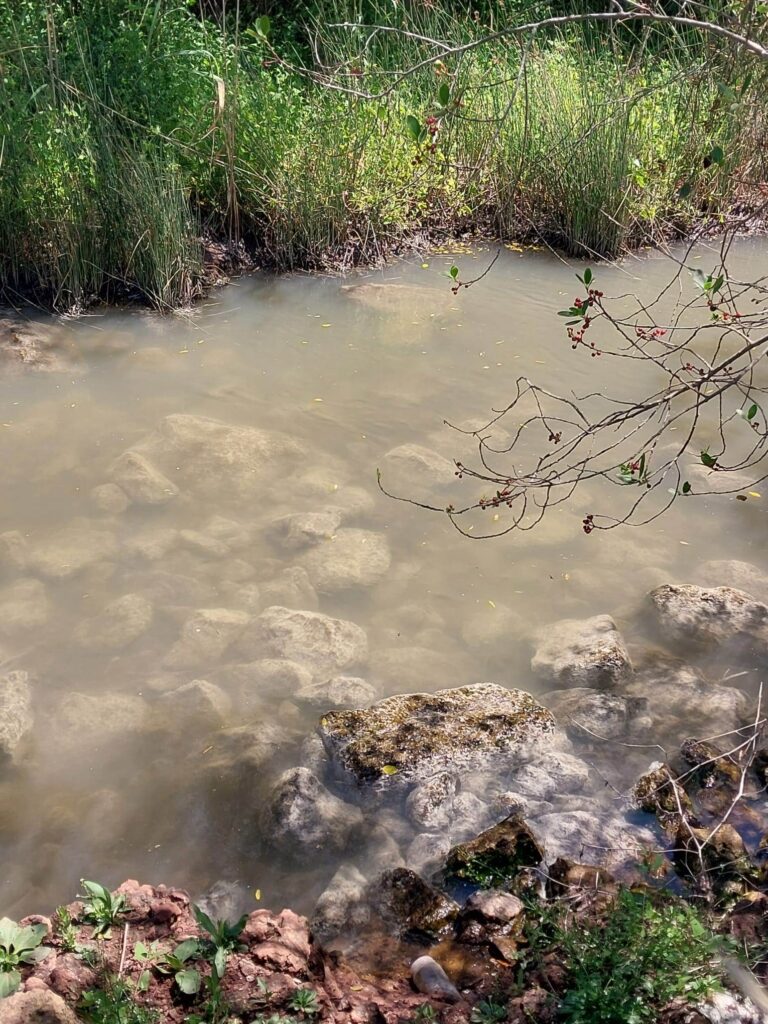
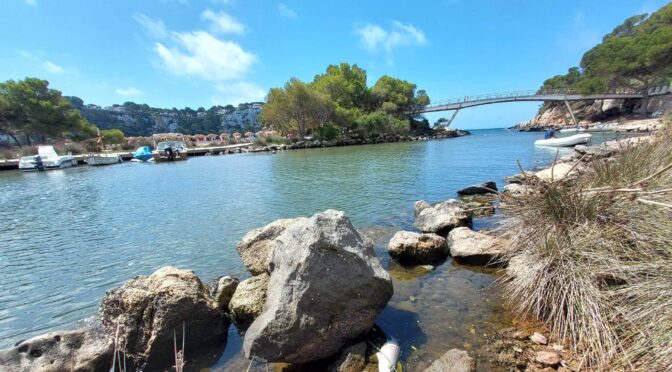
For many years, the stream at Cala Galdana has suffered repeated pollution discharges. Numerous inspections have been carried out by different monitoring and enforcement bodies, yet the source of the periodic spills that alter the colour and smell of the water flowing from the Algendar ravine has still not been identified.
It is urgent that the municipalities of Ferreries and Ciutadella excavate inspection trenches along both sides of the stream and intercept any pipelines that do not serve a public purpose. Only then will it be possible to identify those responsible and put an end to the current situation of impunity.
Because it is clear that whoever is causing this pollution is fully aware of their actions. When incidents occur every year, several times each season, and repeatedly generate media headlines, nobody can claim ignorance of either the problem or its consequences.
The Cala Galdana development began in the early 1970s on the lower section of what was locally known as the River, a name derived from the many springs that once kept water flowing throughout the year. At that time there was no sewer network, and wastewater was managed through septic tanks and direct discharges into the stream. Environmental legislation, protected-area regulations and even democracy had yet to arrive.
Over time, a sewerage system was built to collect wastewater from the entire urban area, which extends across two municipal boundaries, and transport it to the Serpentona wastewater treatment plant. There, the water is treated before being discharged into the stream. As has been observed in other older developments, it is entirely possible that some of the original pipelines were never removed. These abandoned connections are likely being used for the clandestine discharges.
Those responsible prefer to release polluted wastewater into the stream rather than into the sewer network because they know that sending it to the treatment plant would create serious operational problems and trigger an investigation that could ultimately reveal the source of the pollution.
A similar situation occurred for many years with an industrial laundry facility in Ferreries, which discharged wastewater into the Trebalúger stream until the case eventually reached criminal court.
GOB has also inspected the Cala Galdana stream on numerous occasions without being able to identify the discharge point. Analyses carried out at the treatment plant show that it is operating correctly. For this reason, the municipalities of Ferreries and Ciutadella should open up the walkways on both sides of the stream in order to intercept underground pipelines leading to the watercourse. If these are public service networks, such as stormwater drains, they can simply be reconnected. If their origin is unknown, modern inspection technologies, including camera systems, can be used to trace them back to their source. The responsible parties should then be sanctioned and the illegal connections permanently closed.
When that happens, it will be important to ensure that the findings are made public. Those repeatedly causing these pollution incidents must be identified and face meaningful penalties.
At the very least, it seems that we have moved beyond the claims made years ago by certain interested parties who attempted to blame the pollution on the stream’s natural waters, on seagrass, or even on ducks. No—the source of the problem is a human hand acting knowingly and deliberately, and it must be identified.